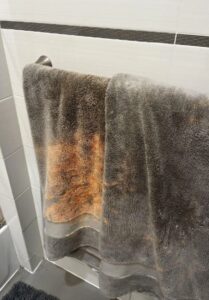
It started as one tiny orange spot—barely noticeable at first—on my favorite gray towel.
I scrubbed it, washed it, even tried soaking it overnight, but it refused to fade.
A few days later, another mark appeared, then another, until it looked like my bathroom linens had been splashed with orange paint.
I switched detergents, deep-cleaned my washer, even blamed the water pipes. But nothing worked. The mystery became so frustrating that I finally decided to dig deeper—and what I discovered completely changed how I think about towels, skincare, and even water quality.
The truth is, those orange marks aren’t stains at all. They’re color loss. One of the most common causes is a popular ingredient found in acne creams, gels, and spot treatments—benzoyl peroxide. When this ingredient touches towels or pillowcases, it doesn’t just leave residue; it actually removes dye, leaving behind bright orange or yellow patches that can’t be washed away. The color doesn’t transfer from something else—it’s literally bleached out. That means even clean, freshly washed towels can develop marks if they come into contact with skin or hair products containing peroxide.
But benzoyl peroxide isn’t the only culprit. Tap water with high iron content can cause rusty discoloration that worsens with heat from the dryer. Hair dyes, self-tanners, and tinted shampoos often transfer subtle pigments that only reveal themselves after the fabric dries. Even household cleaners with hidden bleaching agents can accidentally splash onto towels and leave lasting marks days later. Once I realized how many everyday items could be responsible, I understood why the stains kept returning despite my best cleaning efforts.
Now, I take a few simple precautions that have made a world of difference. I use white towels when applying skincare, let products fully dry before dressing, and installed a small water filter to reduce iron buildup. For towels that are already marked, I repurpose them for cleaning or re-dye them darker instead of throwing them out. What once felt like an unsolvable mystery turned into a small lesson about everyday chemistry. And now, every time I see an orange mark, I don’t stress—I know exactly why it’s there and how to stop the next one from appearing.