Do you also love sweetening your herbal tea or yogurt with a spoonful of honey?
But are you sure it’s 100% natural?
With counterfeit products on the rise, it’s getting harder and harder to tell real honey from fake.
Luckily, there are a few easy tests you can do at home to make sure you’re not getting fooled.
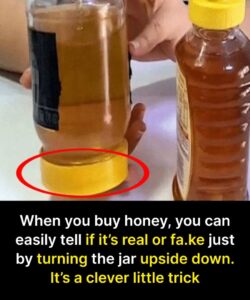
The bottle test: a simple gesture with valuable insight
This is the quickest and most fun method—and it works quite often. Before buying a jar of honey at the store, take a good look at the container. If the jar is transparent, you’re already one step ahead.
Pick it up, shake it up and down three times, then flip it upside down. What do you notice? If air bubbles appear and rise slowly to the top, chances are you’re holding real honey. These bubbles can take up to two hours to fully disappear. But if they vanish quickly—or if there are none at all—be careful. That could be a sign the honey has been mixed with industrial syrup or other additives.
The water glass test: a little chemistry trick at home
This one’s perfect for curious minds who enjoy experimenting! Grab a glass of water at room temperature. Take a spoonful of honey and gently let it drop into the center of the glass—don’t stir it.
You’ll see the result immediately: if the honey sinks to the bottom without dissolving, that’s a good sign. But if it starts to dissolve right away, that means it’s been blended with other substances. The result? It loses its richness and nutritional benefits.
The crystallization test: a natural clue to keep in mind
Real honey has character—and that’s what makes it so special! One of its natural behaviors is its tendency to crystallize, especially when it gets cooler. Below 57°F (14°C), it forms beautiful crystals, like tiny golden beads. But no worries: they’ll slowly melt once the temperature rises above 68°F (20°C).
Honey that stays completely liquid all year round—even in winter—may contain added sugar syrup or other thinning agents. Bonus tip: some genuine honey might have tiny natural bits in it, like traces of wax or pollen. A small detail that mass producers just can’t replicate.