Have you ever eaten a big meal and wondered, “Where does all that food go—and how long does it actually stay in my stomach?”
Maybe you’ve noticed how some foods make you feel full for hours, while others leave you hungry again in no time.
It’s not just your imagination—different foods truly digest at different speeds, and that affects everything from your energy levels to your weight and even your sleep.
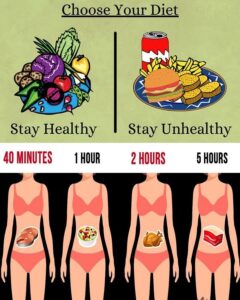
Understanding how your body digests food can change the way you eat. It can help you avoid bloating, boost metabolism, and make smarter meal combinations that keep you energized instead of sluggish. But before diving into how long digestion takes, let’s start with something most people don’t realize: digestion isn’t just about your stomach—it’s an entire journey.
The Journey of Digestion: More Than Just Your Stomach
When you take your first bite, digestion begins immediately in your mouth. Enzymes in your saliva start breaking down carbohydrates before you even swallow. From there, food travels down your esophagus into your stomach, where acids and enzymes continue the process.
Depending on what you’ve eaten, this stomach stage alone can last anywhere from 30 minutes to 6 hours. Afterward, food moves into your small intestine for nutrient absorption—a process that can take another 6 to 8 hours. Finally, it enters the large intestine, where water is absorbed, and what’s left is processed for elimination.
So in total, a full digestive cycle can take 24 to 72 hours—but the exact timing depends on what you ate.
Why Some Foods Digest Faster Than Others
The human body digests foods differently based on their structure and nutrient composition. Here’s what influences the pace:
- Water content: Foods high in water (like fruits and vegetables) digest quickly.
- Fiber: Slows digestion because it takes longer for your body to break down.
- Protein and fat: Require more time and effort from your digestive system.
- Meal combinations: Pairing certain foods can speed up or slow down digestion.
So, a light fruit snack might pass through your stomach in an hour, while a steak dinner could stay there for half the day.
How Long It Takes for Different Foods to Digest
Let’s break it down clearly so you can understand how your body works behind the scenes.
| Food Type | Average Digestion Time | Effect on Energy |
|---|---|---|
| Water | 0 minutes (absorbed immediately) | Instant hydration |
| Fruits (e.g., watermelon, oranges) | 30–60 minutes | Quick energy boost |
| Vegetables (raw) | 1–2 hours | Steady energy, light feeling |
| Starches (rice, pasta, potatoes) | 2–3 hours | Gradual energy release |
| Proteins (chicken, fish, eggs) | 3–4 hours | Long-lasting fullness |
| Fatty foods (cheese, red meat) | 5–6 hours or more | Sustained but heavy feeling |
Notice how lighter foods move quickly, while protein and fat take much longer. That’s why you feel hungry faster after eating fruit but can stay full all afternoon after a high-protein meal.
Case Study: Sarah’s Midday Energy Crash
Sarah, 46, always started her day with toast and jam but found herself exhausted by 10:30 a.m. Her nutritionist suggested adding a boiled egg to her breakfast. Within a week, Sarah noticed she stayed satisfied until lunchtime.
What changed? Eggs take longer to digest, keeping blood sugar stable and hunger at bay. This small adjustment completely changed her mornings—proof that digestion timing affects energy more than you might think.
Fast vs. Slow Digestion: Which Is Better?
Both have their benefits—it depends on your goal.
Fast-digesting foods (like fruits and simple carbs) give you quick energy. They’re great before a workout or when you need an immediate boost. But eaten alone, they can lead to a blood sugar spike followed by a crash.
Slow-digesting foods (like proteins, fats, and whole grains) sustain energy, improve focus, and reduce overeating. However, too many heavy foods at once can make you sluggish or interfere with sleep if eaten late.
The secret is to balance both. Pair quick-digesting foods with slower ones for steady energy throughout the day.
Signs Your Digestion Might Be Out of Balance
Your body gives clear signals when something isn’t right with digestion. Pay attention to:
- Frequent bloating or gas after meals
- Fatigue within 1–2 hours of eating
- Constipation or irregular bowel movements
- Heartburn or indigestion
- Feeling “heavy” or overly full for long periods
These could mean you’re combining foods poorly, eating too fast, or consuming items your body struggles to break down.
How to Support Healthy Digestion Naturally
Here are small but powerful habits that can make digestion smoother and more efficient:
- Chew slowly. Digestion begins in the mouth—chewing well reduces the burden on your stomach.
- Stay hydrated. Water helps move food through your digestive tract.
- Avoid lying down right after eating. Give your body at least 2 hours before resting.
- Eat smaller, balanced meals. Large, heavy meals overload your stomach.
- Move a little after meals. A short walk aids digestion and reduces bloating.
But Wait—What About “Food Combining”?
You may have heard claims that combining certain foods can help or hinder digestion. While not all these theories are backed by strong evidence, some combinations do make sense:
- Pair fiber-rich veggies with proteins for a balanced release of energy.
- Avoid eating fruit right after a heavy meal—it digests faster and can ferment, leading to bloating.
- Combine healthy fats (like olive oil or avocado) with vegetables to enhance nutrient absorption.
Small tweaks like these can make your digestion smoother without drastic dietary changes.
Table 2: Tips to Improve Digestive Timing and Comfort
| Habit | Why It Helps | When to Do It |
|---|---|---|
| Drink warm water before meals | Prepares stomach enzymes | 15 minutes before eating |
| Add probiotics (yogurt, kefir) | Supports gut bacteria | Daily |
| Include fiber gradually | Prevents constipation | Morning or lunch |
| Limit caffeine after heavy meals | Reduces acid reflux | After lunch/dinner |
| Eat dinner earlier | Allows full digestion before sleep | 3–4 hours before bedtime |