You know where to find me all the time? In my garden. I love gardening. There’s something incredibly fulfilling about nurturing plants, watching them grow, and seeing your hard work come to life.
But let’s be honest—it can be pretty tough. One of the biggest challenges is dealing with pests.
Sometimes you’re not even sure which pests are beneficial and which ones will destroy everything you’ve worked so hard for.
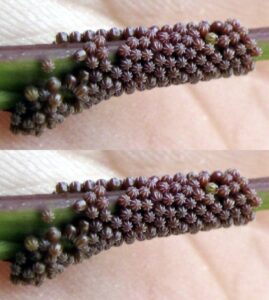
Recently, I came across a photo circulating on social media that perfectly illustrates this confusion. When I first saw it, it freaked me out. The photo showed a leaf covered in these tiny, intricate, black geometric shapes. At first glance, it looked like the leaf was covered in some kind of alien lattice or maybe even a weird disease. Many people, including myself, wondered what it could be.
After doing some research, I discovered that these strange patterns are actually Nymphalis Antiopa butterfly eggs. Now, if you’re not familiar with this species, let me introduce you. The Nymphalis Antiopa, also known as the Mourning Cloak butterfly, is a fascinating insect with a unique lifecycle and some pretty interesting habits.
First off, let’s talk about the eggs. The photo I saw was a close-up of these eggs on a leaf. They look almost like a delicate black lace spread across the surface. It’s really quite beautiful once you get past the initial shock. The eggs are laid in clusters, and each tiny egg is a perfect little geometric wonder. When I first saw it, I thought, “This is either going to be really good for my garden or really bad.”
The good news is that the Nymphalis Antiopa butterfly is actually quite beneficial. The larvae, or caterpillars, feed on leaves, but they typically prefer trees and shrubs like willows, elms, and poplars. So, if you have a garden full of flowers and vegetables, you’re probably safe. In fact, these butterflies can be quite helpful because they also feed on rotting fruit and help with the decomposition process.
Watching the lifecycle of these butterflies is truly fascinating. After hatching from those strange, intricate eggs, the caterpillars emerge. They’re black with tiny white spots and have spiny, bristly bodies. They go through several stages, known as instars, where they shed their skin and grow larger each time.
Once they’re fully grown, the caterpillars find a safe place to pupate. They spin a chrysalis, which is like a little sleeping bag where they undergo their transformation. This stage can last anywhere from a couple of weeks to several months, depending on the climate and time of year. When they finally emerge, they’re beautiful Mourning Cloak butterflies with dark, velvety wings bordered with a bright yellow edge and adorned with blue spots.
One of the most interesting things about Mourning Cloak butterflies is their behavior. Unlike many other species, these butterflies hibernate during the winter. They find a cozy spot under loose bark, in a pile of wood, or even in an old shed. When spring arrives, they’re some of the first butterflies to be seen, often even before the flowers start to bloom. This early appearance is partly why they’re called Mourning Cloaks—the dark, somber wings against the stark, early spring landscape look a bit like a mourning garment.
As gardeners, we often focus on the immediate impact of insects on our plants. We see caterpillars and think, “Uh-oh, they’re going to eat everything!” But it’s important to take a step back and look at the bigger picture. The Nymphalis Antiopa butterfly is a perfect example of how nature balances itself out. Yes, the caterpillars will eat some leaves, but they’re not going to decimate your garden. In fact, by providing a habitat for these butterflies, you’re contributing to a healthier ecosystem.
So, what should you do if you find these eggs or caterpillars in your garden? My advice is to leave them be. Enjoy the process and watch the transformation. If you’re really worried about your plants, you can gently move the caterpillars to a tree or shrub where they’ll be happier and less likely to munch on your prized flowers.

For another garden mystery, discover the tiny “blueberries” that are actually bugs.
In the end, it’s all part of the adventure. Each season brings new surprises and new challenges, but that’s what makes gardening so rewarding.